
Shunt Resistor Manufacturer Selection: Key Factors for Precision and Reliability
2026-07-13
When selecting a shunt resistor manufacturer, precision and reliability aren't just buzzwords—they’re the foundation of every successful design. From temperature stability to low thermal EMF, the right partner can make or break your current sensing performance. At the heart of this decision lies the need for a supplier who truly understands the nuances of resistive technology. That’s where Milliohm comes into play, offering expertise that turns complex requirements into dependable solutions. In this post, we’ll explore the key factors that separate exceptional shunt resistor manufacturers from the rest, so you can make an informed choice with confidence.
Decoding Precision: What Tolerance and TCR Really Mean
Precision isn't just a buzzword—it's the silent contract between a component's stated value and its actual behavior. When you pick a resistor, two numbers often decide whether your circuit hums along or drifts into chaos: tolerance and temperature coefficient of resistance (TCR). Tolerance tells you how far the resistance at room temperature can stray from its labeled ohms, while TCR reveals the subtle dance that happens when heat enters the picture. Together, they paint a far more honest portrait of real-world performance than any single figure on a datasheet ever could.
Imagine a 10kΩ resistor with a 1% tolerance. At 25°C, you might expect anything between 9.9kΩ and 10.1kΩ. But that's only half the story. Raise the temperature to 85°C, and a mediocre TCR of 200 ppm/°C adds another 120Ω of drift—enough to push a precision voltage divider off by more than a percent. Suddenly, the initial tolerance feels like a warm-up act. The real test is how steadily that value holds when your device leaves the lab bench and faces the messy, fluctuating climate of actual use.
Good design often means reading between the lines. A 0.1% resistor can still misbehave if its TCR runs wild, while a well-chosen 1% part with a tight TCR can deliver surprising stability. It's not about chasing zeros on a label; it's about understanding where and how the numbers lose their meaning. Once you see tolerance and TCR as partners in a thermal feedback loop, you stop just picking components and start orchestrating predictability.
Material Matters: The Role of Manganese-Copper Alloys
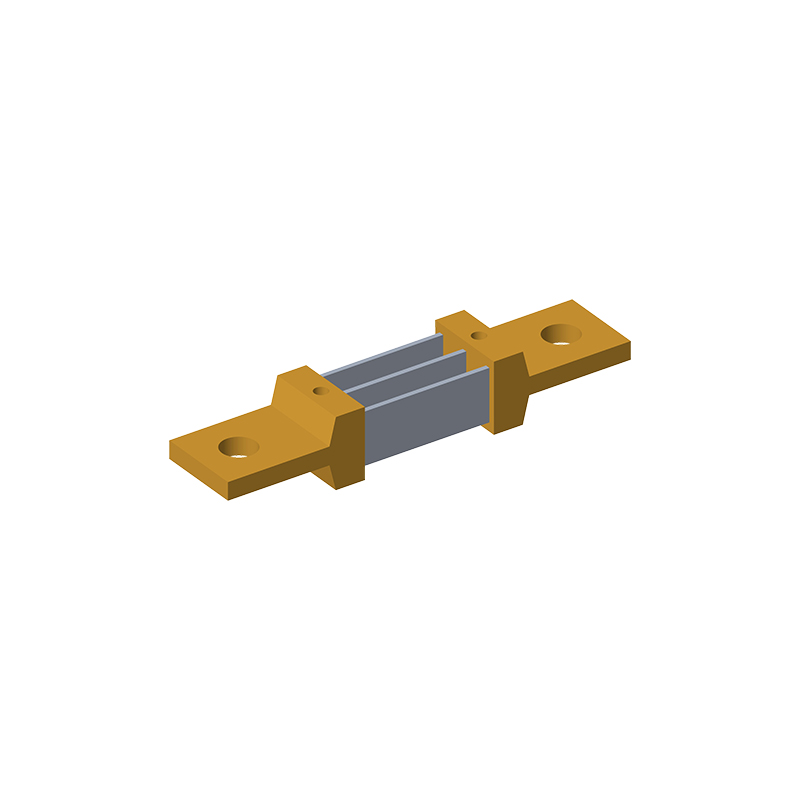
Manganese-copper alloys, often overlooked in everyday applications, have quietly become indispensable in fields where precision and reliability are paramount. These alloys combine the high damping capacity of manganese with the excellent thermal and electrical conductivity of copper, resulting in a material that can absorb vibrations and reduce noise without sacrificing performance. This unique combination makes them ideal for components like precision instruments, audio equipment, and marine propellers, where even minor vibrations can compromise functionality.
The true genius of manganese-copper alloys lies in their ability to manage mechanical energy. When subjected to stress, their internal structure allows them to dissipate energy as heat rather than transmitting it as noise or oscillation. This property, known as damping, is crucial in applications ranging from underwater sonar systems to high-end loudspeakers. Engineers often turn to these alloys when they need to prevent resonance-induced failures, ensuring that structures remain stable under dynamic loads.
Beyond damping, manganese-copper alloys exhibit excellent corrosion resistance, particularly in seawater environments. This makes them a preferred choice for shipbuilding and offshore platforms. Furthermore, their non-magnetic nature prevents interference with sensitive electronic equipment, opening doors for use in medical imaging devices and military hardware. As industries push for quieter and more durable materials, these alloys continue to evolve, with researchers exploring new compositions to enhance strength and workability while retaining their signature damping qualities.
Thermal Considerations: Power Rating and Heat Dissipation
When selecting components for any power-handling application, the relationship between power rating and heat dissipation can't be an afterthought. The stated power rating of a resistor, for example, assumes a specific ambient temperature and cooling environment—often still air at 70°C, with derating applied above that point. Exceeding these limits doesn't just risk immediate failure; it accelerates aging, drifts resistance values, and can undermine the reliability of the entire circuit. Designers need to look beyond the headline number and examine the fine print in datasheets, understanding that actual thermal performance is a dance between the part's internal losses and the thermal resistance to its surroundings.
Heat dissipation isn't just about the component itself; it's a systems challenge. A power transistor mounted on an undersized heat sink might meet the math on paper, but if the air flow is restricted or the ambient temperature swings high, the junction temperature can soar past safe limits. Pairing devices with the right cooling strategy—whether it's natural convection, forced air, or even liquid cooling—depends on the thermal resistance from junction to case, case to sink, and sink to ambient. Each interface matters, and a thin smear of thermal paste, or a misaligned thermal pad, can create a bottleneck that no amount of heatsink mass can fix.
A practical approach to thermal management starts early in the design phase, not as a last-minute verification step. Simulating power dissipation under worst-case load conditions, factoring in voltage drops and switching losses, gives a realistic picture of heat generation. Then, mapping out the thermal path with components like thermal vias in PCBs or selecting packages like D2PAK with exposed pads can reduce thermal resistance enough to keep the design within safe margins. It's a balance between cost, space, and performance, but overlooking it often leads to expensive respins or field failures that could have been avoided with a few careful calculations and a thermal camera.
Long-Term Stability: Drift, Solder Heat and Moisture Resistance
Precision resistors don’t live in a bubble—they face heat from soldering, humidity from the environment, and the silent creep of value drift over time. In our testing, thin-film types often hold their own better than thick-film under thermal stress, showing minimal shift after reflow. It’s not just about initial tolerance; it’s about how gracefully a component ages, especially in circuits where a few milliohms of unexpected change can throw off calibration.
Solder heat can be a sleeper hit to stability. The abrupt temperature spike during assembly causes subtle changes in the resistive element, and if the substrate or termination isn’t fully settled, you’ll see the resistance wander for days afterward. We’ve learned that preconditioning chips with a bake and a short overload can tame this drift early, letting them settle into a predictable rhythm. Without that, you’re essentially shipping a component still finding its electrical identity.
Moisture resistance gets overlooked until condensation inside the package forms a parasitic conductive path, or absorbed water swells the coating enough to mechanically stress the element. For outdoor gear or unsealed enclosures, this matters. Some coatings shrug off 85% relative humidity at 85°C like it’s nothing; others degrade subtly, with leakage currents growing over weeks. You won’t see it on a datasheet, but accelerated humidity tests tell you which parts stay honest in the long haul—and which ones start lying to your ADC.
Compliance and Testing: AEC-Q200 and Beyond
Automotive-grade passive components face a gauntlet of stress tests designed to expose weaknesses long before they reach a vehicle. AEC-Q200 sets the baseline, subjecting parts to thermal shock, humidity bias, and mechanical vibration. Each test targets a specific failure mode—cracked terminations from sudden temperature swings, whisker growth in tin-plated leads, or parametric drift under damp heat. Pass rates alone don't tell the full story; engineers dig into the failure analysis reports to understand how a capacitor or resistor degrades at the materials level, looking for subtle shifts in microstructure that hint at latent faults.
Beyond the standard checklist, many manufacturers impose their own suite of validation procedures. Some replicate real-world mounting conditions by soldering components onto representative PCBs before testing, while others run extended life tests at elevated voltages and temperatures until catastrophic failure occurs. The goal is to map out the wear-out region of the bathtub curve with enough data to build robust derating guidelines. Increasingly, this includes assessing sulfur resistance in thick-film resistors—a vulnerability that standard AEC-Q200 only lightly touches, but which can lead to open circuits in environments exposed to engine exhaust or industrial pollution.
Looking forward, the push for zero-defect automotive components is driving more statistically rigorous acceptance tests. Techniques like highly accelerated life testing (HALT) and reliability verification through Weibull analysis are being folded into the qualification flow. The conversation is shifting from “does it pass the test?” to “what is the probability it will survive 15 years of service under a specific mission profile?”. This probabilistic mindset, coupled with tighter material controls and inline process monitoring, forms the backbone of a compliance strategy that sees AEC-Q200 not as a finish line, but as a starting point for lifetime robustness.
Supplier Capabilities: Custom Designs and Fast Prototyping
We don’t just take orders—we shape ideas into something tangible from the very first sketch. Whether you arrive with a fully baked vision or a rough concept scribbled on a napkin, our engineering team listens hard, asks the right questions, then gets to work. Custom designs here aren’t about tweaking a template; they’re built from scratch to match your exact specs, down to material behavior and tolerances. And because we keep prototyping in-house, cycles stay fast—often turning revised samples around in days, not weeks. It’s less about process and more about moving at the speed of your ambition.
Rapid prototyping lives at the heart of our operation. Our floor blends tried-and-true methods with newer approaches—think CNC machining sitting alongside additive work, all under one roof. That mix lets us pivot without delay when a design needs a quick physical check. We’ve seen how a single prototype touch early on can save months of back-and-forth later, so we push to get parts into your hands while the conversation is still warm. No inflated lead times, no handoff confusion; just a team obsessed with closing the gap between a digital model and a real-world object.
Real collaboration doesn’t happen through a portal. We embed our people in the problem, often joining your design reviews or walking the line where the part will live. That hands-on curiosity means we catch potential issues—like assembly quirks or material fatigue—before they become expensive mistakes. Our suppliers know us by name, not just a PO number, which helps when you need a specialty alloy or an accelerated heat treat. It’s straightforward: we bring a blend of craft and grit that turns tricky concepts into reliable, production-ready outcomes, often faster than you’d think possible.
FAQ
A manufacturer that invests in advanced trimming and calibration techniques during production can achieve exceptionally low tolerance levels, often down to 0.1% or even tighter. Additionally, consistent temperature coefficient of resistance (TCR) values across batches indicates tight process control, which directly impacts measurement accuracy in real-world applications.
Look for evidence of rigorous stress testing, such as thermal cycling, humidity exposure, and load life tests. A reliable supplier will provide detailed datasheets with mean time between failures (MTBF) data or load-life stability figures, and they should be transparent about their qualification processes for materials and manufacturing.
Yes, certifications like ISO 9001, IATF 16949 for automotive, or ISO 17025 for testing laboratories signal a structured quality management system. For precision and reliability, also check for AEC-Q200 compliance if the resistors are intended for harsh automotive environments, or MIL-PRF standards for military-grade components.
Material choice is critical because it directly affects TCR, stability, and electromigration resistance. Top manufacturers often use specialized alloys like Manganin or Zeranin for low TCR and high stability. They meticulously control the composition and implement strain-relief designs to minimize resistance drift caused by thermal expansion mismatches.
A capable manufacturer can customize not just the electrical specifications but also the mechanical form factor to fit space-constrained designs or specific thermal management needs. This includes providing low-inductance designs for high-frequency measurements or integrating Kelvin (4-wire) connections for precise current sensing, ensuring the resistor performs optimally in your exact setup.
Ask for statistical process control (SPC) data and ongoing reliability monitoring reports. A trustworthy manufacturer will have a system for random sampling and testing against datasheet parameters, and they should willing to share histograms of key parameters from recent production lots, showing minimal variation and no outliers.
Conclusion
When selecting a shunt resistor manufacturer, understanding the interplay between tolerance, TCR, and material composition is fundamental to achieving precision. Low tolerance values alone are insufficient if the temperature coefficient of resistance (TCR) is high, as resistance drift under varying thermal conditions can compromise measurement accuracy. Manganese-copper alloys stand out for high-precision applications due to their inherently low TCR and thermal EMF, ensuring stable performance in dynamic environments. A supplier that demonstrates deep knowledge in optimizing these material characteristics, rather than simply offering off-the-shelf components, adds significant value.
Equally critical are thermal management and long-term stability. A robust power rating and efficient heat dissipation design prevent performance degradation, while resistance to drift, solder heat, and moisture ensures reliability over the product's lifespan. Compliance with rigorous standards like AEC-Q200 indicates a manufacturer’s commitment to quality, but true partnership is revealed through supplier capabilities such as custom designs and fast prototyping. The ability to rapidly iterate tailored solutions accelerates development cycles and addresses unique application challenges, ultimately making precision and reliability achievable in real-world deployments.
Contact Us
Contact Person: Yuying Gao
Email: [email protected]
Tel/WhatsApp: +86 18926013721
Website: https://en.milliohm.net/